Hormone Pellets vs. Injections, Creams, and Patches: What Is the Difference?
Choosing to explore hormone therapy is one decision. Figuring out which delivery method fits your life is another.
Pellets, injections, creams, and patches can all be used to deliver hormones, but the experience of using them can look very different. One person may prefer a treatment that does not require daily attention, while someone else may feel more comfortable with an option that is easier to adjust or discontinue.
There is no single method that works best for everyone. Understanding the practical differences can help you have a more productive conversation with your provider and choose an option based on your health, preferences, and everyday routine.
What Are Hormone Pellets?
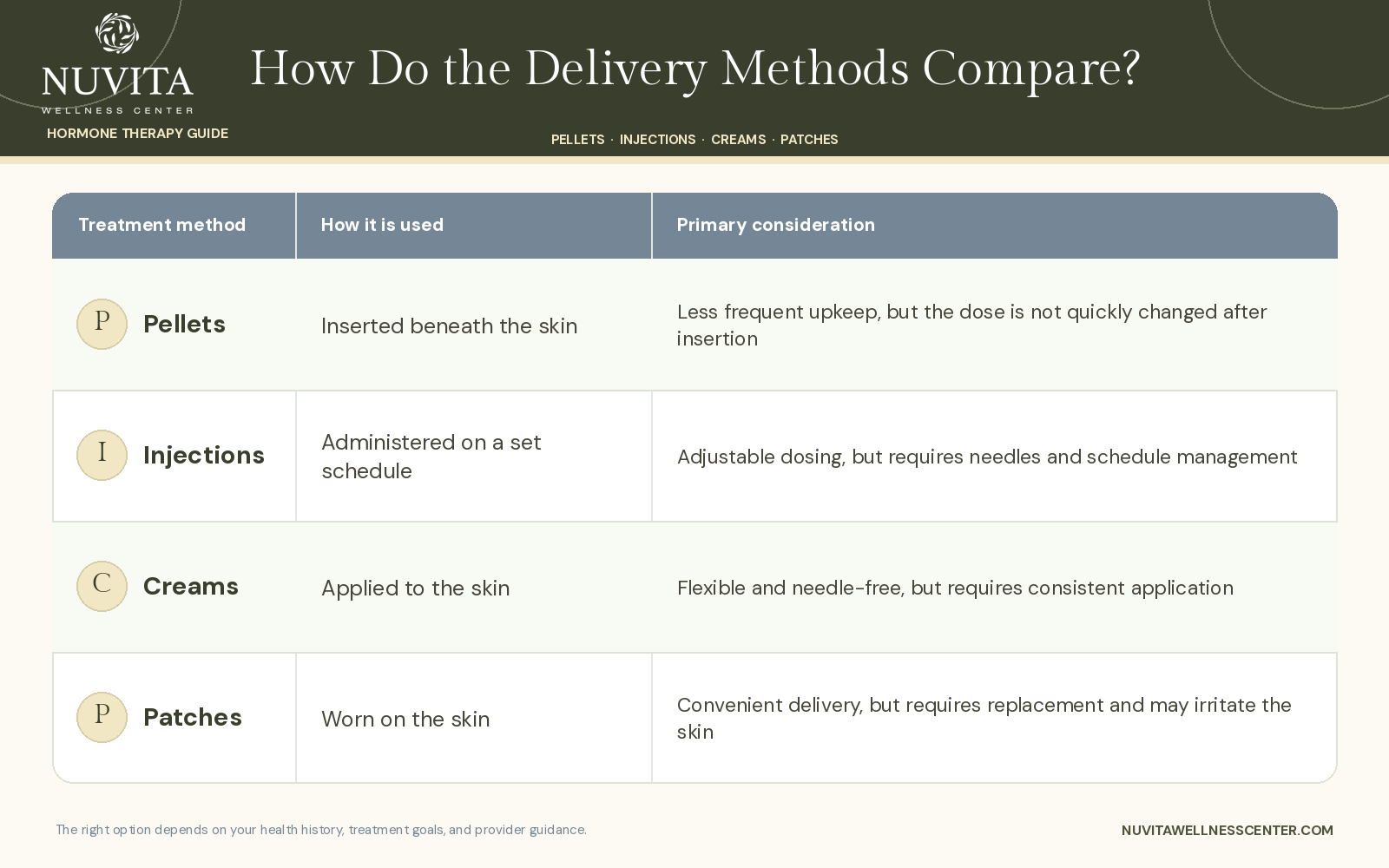
Hormone pellets are small implants placed beneath the skin, commonly in the hip or upper buttock area. The insertion is performed during an in-office procedure using a small incision. Once placed, the pellets gradually release hormones into the body over time.
One of the main reasons patients consider pellets is convenience. There is no daily cream to apply, patch to replace, or injection schedule to remember. After insertion, the pellet remains in place until it dissolves.
That convenience comes with an important consideration, however. Pellets cannot be easily removed or adjusted after insertion. If your dose needs to change, your provider may need to make those changes during a future treatment cycle. The insertion site may also feel tender or require temporary activity restrictions while it heals.
How Do Hormone Injections Work?
Hormone injections deliver medication directly into the body using a needle. Depending on the treatment plan, injections may be administered at home or in a medical office on a regular schedule.
Some patients like injections because dosing can be adjusted without waiting for a pellet to dissolve. Others may find it difficult to stay consistent with their schedule or may feel uncomfortable giving themselves injections.
Hormone levels may also fluctuate between doses, depending on the medication, dose, and frequency. Your provider can help determine an injection schedule and monitor how you feel throughout each treatment cycle.
What Are Hormone Creams?
Hormone creams are applied directly to the skin, usually once or more each day as prescribed. The hormone is absorbed through the skin and enters the bloodstream.
Creams do not involve needles or an insertion procedure, which can make them appealing to patients who prefer a noninvasive option. They also allow a provider to adjust or discontinue the dose more easily than with an implanted pellet.
The tradeoff is that creams require a consistent routine. They must be applied as directed, often to specific areas of the body. Patients may also need to take precautions to prevent the medication from transferring to children, partners, or pets through skin-to-skin contact.
How Are Hormone Patches Different?
Hormone patches are worn on the skin and release medication gradually. Depending on the product and treatment plan, a patch may need to be replaced once or several times during the week.
Like creams, patches avoid injections and minor procedures. They can also be removed if treatment needs to be stopped. However, some patients experience skin irritation or have trouble keeping a patch securely in place, particularly during exercise, swimming, or hot weather.
Patches also need to be changed on schedule. For someone who already has a well-established medication routine, that may feel manageable. For someone who regularly forgets daily or weekly tasks, it may be less convenient.
The differences are not limited to convenience. Your medical history, symptoms, treatment goals, hormone levels, and response to therapy all matter when deciding which option may be appropriate.
Which Hormone Therapy Method Lasts the Longest?
Hormone pellets generally remain in the body longer than individual injections, creams, or patches. The exact duration varies based on the prescribed therapy and individual factors.
A longer-lasting option may sound automatically preferable, but frequency is only one part of the decision. Some people prioritize convenience, while others prefer the flexibility of a treatment that can be adjusted more quickly.
The better question is not simply, “Which one lasts the longest?” It is, “Which option gives me the balance of convenience, flexibility, and medical oversight that I need?”
Which Option Is Easiest to Adjust?
Creams, patches, and injections may offer more dosing flexibility because the amount or schedule can be changed without waiting for an implanted pellet to dissolve.
Pellet dosing can still be modified in future treatment cycles, but adjustments are not immediate once the pellet has been inserted. This is one reason proper lab testing and a thorough evaluation are important before beginning treatment.
Regardless of the method, you should not adjust your dose or schedule on your own. Any changes should be discussed with your provider and guided by your symptoms, lab results, and overall health.
Are Hormone Pellets Better Than Injections, Creams, or Patches?
Hormone pellets are not automatically better than other delivery methods. They may be a good fit for someone who values convenience and does not want to manage treatment every day or week. Another patient may prefer the flexibility of an injection, cream, or patch.
It also helps to be honest about your routine. If you know you struggle to remember daily applications, a cream may become frustrating. If you dislike needles, injections may not be realistic. If you have sensitive skin, a patch or topical product may create problems of its own.
A treatment can only work as intended when it is both medically appropriate and practical enough to use consistently.
How Will Your Provider Help You Choose?
Your provider will consider your symptoms, medical history, lab results, current medications, risk factors, and treatment goals. You should also have an opportunity to discuss how each method is used and what follow-up care it requires.
Useful questions to ask include:
How often will I need to use or replace the treatment?
How quickly can the dose be adjusted?
What side effects should I watch for?
Will I need repeat bloodwork?
Are there precautions I should follow at home?
What happens if I want to stop treatment?
The right appointment should feel like a conversation, not a sales pitch. You should understand why a particular method is being recommended and feel comfortable asking what the other options would involve.
Find a Hormone Therapy Option That Fits Your Life
Hormone therapy is not only about choosing a medication. It is about finding a delivery method that makes sense for your health and the way you actually live.
Some patients value the set-it-and-forget-it nature of pellets. Others feel more comfortable with the flexibility of injections, creams, or patches. Neither preference is wrong. What matters is making the decision with clear information, appropriate testing, and guidance from a qualified provider.
At Nuvita Wellness Center in Jacksonville, we take the time to review your symptoms, lab results, health history, and personal preferences before discussing your treatment options. Schedule a consultation to learn more about hormone therapy and which delivery method may be appropriate for you.
Frequently Asked Questions
1. Do hormone pellets require surgery?
Pellet insertion is a minor in-office procedure rather than major surgery. A provider makes a small incision and places the pellet beneath the skin. Patients receive instructions for caring for the insertion area afterward.
2. Can you switch from one hormone delivery method to another?
It may be possible to change delivery methods, but the timing and process depend on your current treatment, hormone levels, symptoms, and medical needs. Any change should be planned with your provider.
3. Do all hormone therapy methods require follow-up bloodwork?
Follow-up care commonly includes a review of your symptoms and may include repeat lab testing. Your provider will determine the appropriate monitoring schedule based on the treatment you receive and how your body responds.
This content is for informational purposes only and is not a substitute for professional medical advice, diagnosis, or treatment. Hormone therapy is not appropriate for everyone. Treatment recommendations and individual results may vary.
There is no single method that works best for everyone. Understanding the practical differences can help you have a more productive conversation with your provider and choose an option based on your health, preferences, and everyday routine.
Bloodwork helps identify possible imbalances, rule out other explanations for your symptoms, and create a treatment plan based on your individual needs.
Feeling unusually tired, emotionally off, or unable to sleep through the night can be frustrating, especially when there’s no clear explanation. Many people assume these symptoms are simply part of aging or stress, but hormones often play a much larger role than expected.
At Nuvita Wellness Center in Jacksonville, our team specializes in Bioidentical Hormone Replacement Therapy (BHRT), a natural approach to helping men and women restore their energy, focus, and youthfulness by addressing hormonal imbalances at the source.